
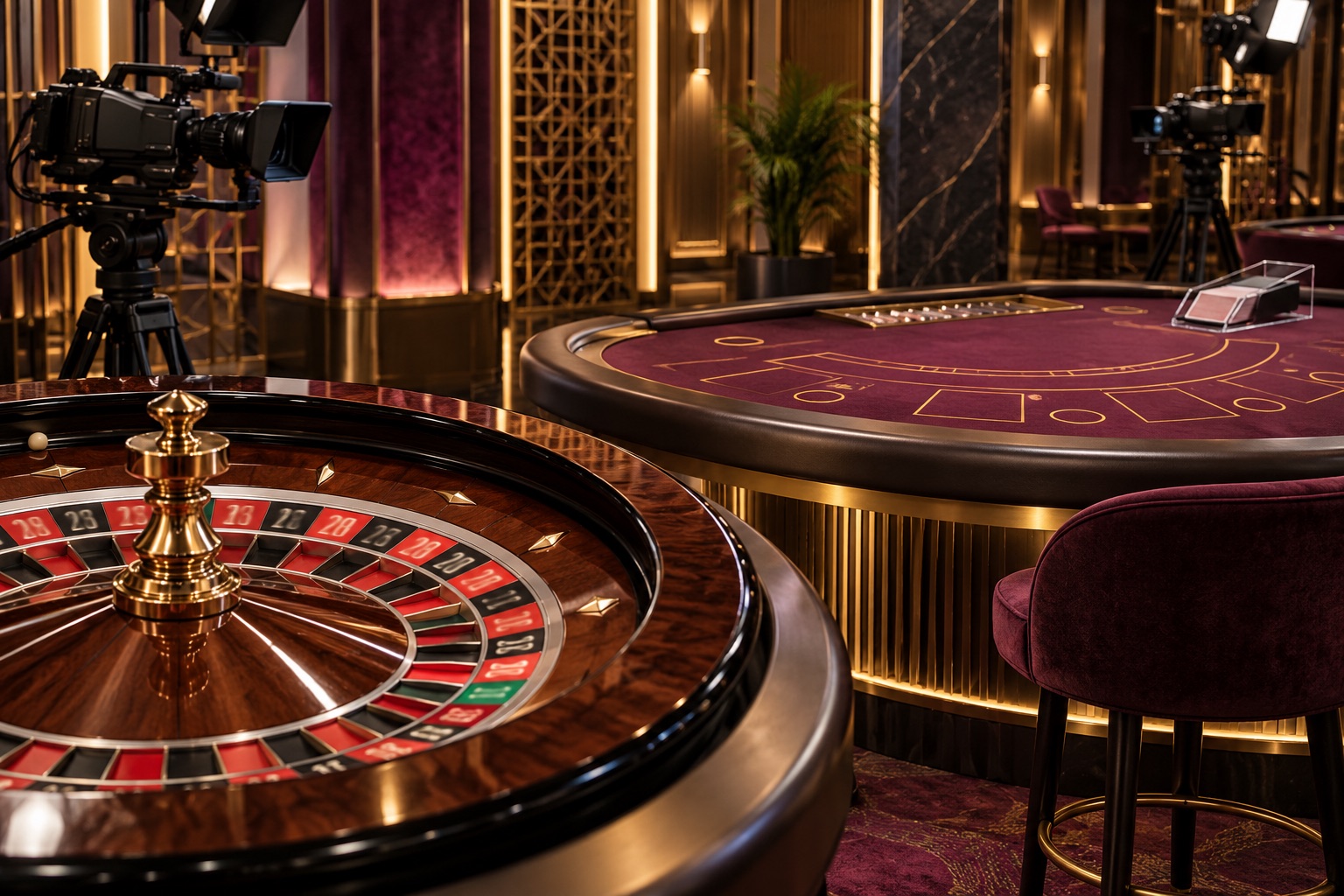
A numbered roulette wheel and a blackjack hand bring two different rhythms to the casino table. The collection highlights D Roulette and a blackjack title from Jackpotter, alongside general rules published by Crown Melbourne and Bicycle Cards.
roobet2027.com is an independent publication, not Roobet.com. These are external game references, not tables operated by this site. It does not create real accounts or process payments, and the catalogue entries do not establish that either title is available here.

D Roulette and the Wheel
Roulette centres on a wheel with numbered pockets and a corresponding table layout. The ball settles in one pocket, determining the round’s result. The layout gives players different ways to cover the numbers: a selection may refer to one number, a group of numbers or a property shown on the table. The table’s rules specify which choices it offers and how each is settled.
Jackpotter lists D Roulette as a named SA Gaming title. That listing identifies the game; Crown Melbourne’s separate published rules provide an example of roulette procedures at its own tables. They are useful for understanding the format without implying that the Jackpotter title uses every detail of Crown’s rules.
Wheel configurations are a material difference between roulette versions. Crown’s published rules describe a single-zero wheel and a wheel with both zero and double zero. The additional pocket changes the possible outcomes, so the appearance of a familiar numbered layout does not make the two wheels mathematically identical.
For a simple mathematical comparison, a single-number selection on a fair single-zero wheel has one matching pocket among 37; on a fair double-zero wheel it has one among 38. This illustrates how an additional pocket changes the number of possible results. It does not establish the equipment or payout at the named D Roulette listing.
Blackjack at the Table
Blackjack follows cards rather than a ball. Bicycle Cards describes the aim as finishing closer to 21 than the dealer without going over. Numbered cards count at face value, face cards count as ten, and an ace can count as one or eleven. An ace therefore has a flexible value, depending on the other cards in the hand.
The familiar choices of hit and stand give the round its pace. A hit adds another card; a stand keeps the current total. A hand that goes over 21 is a bust. The dealer follows the table’s stated procedure, so the sequence of player decisions and the dealer’s subsequent actions are different parts of the same round.
Some versions also allow splitting or doubling under their own conditions. Deck count, dealer treatment of soft totals, side bets and blackjack payouts can vary between tables. The Jackpotter listing names a Smartbet blackjack title, while the Bicycle description supplies general card-game rules rather than a complete specification of that digital title.
An ace illustrates why hand totals need attention. With an ace and a six, the cards can be counted as seven or seventeen under the general values described by Bicycle Cards. An additional card may change which ace value keeps the hand at or below 21. That flexibility is a feature of blackjack’s card values, not a separate side bet.
A two-card blackjack combines an ace with a card worth ten. It reaches 21 immediately, but the payout and treatment of other 21-point hands depend on the table’s version. The name of the game is therefore only a starting point for interpreting the result displayed by a particular service.
The Live Table Setting
A live-table presentation can bring a video view, table equipment and round information together on one screen. The camera shows the cards or wheel as the round proceeds, while the surrounding interface communicates available choices and timing. A game name alone does not establish whether a particular listing uses a human-led table or an automated format.
Presentation and rules answer different questions. The view helps a person follow what happened at the table; the written rules explain which actions count, how a result is settled and what happens if a round is interrupted. A clear video image cannot by itself settle a question about a table’s specific payout or interruption policy.
Round Records and Table Differences
Some interfaces show a round identifier and a history of earlier results. An identifier can help locate a particular round if the operator is asked to explain it. A roulette history is a record of what happened before, not a prediction of the next result. A blackjack record, meanwhile, needs to be read with the rules that applied to that hand.
The games differ in where decisions appear. Roulette selections relate to the numbered layout before a result is known; blackjack decisions relate to the cards in a hand. That distinction shapes the presentation of the two tables even when both are shown within a live-casino setting.
Player Information
Limits, age restrictions and support arrangements belong to the service offering a table. Locate support independently and keep passwords and one-time codes private. Gambling can involve financial loss; a budget and regular breaks help keep a session within an amount a person can afford to lose.